The Call of the Apu
 ulldozers tore through the southern slope of the sacred hill. It wasn't a road—it was an illegal mine. The ground, once covered in q'uwa (medicinal herb), is now nothing but a red wound.
The villagers protested. They were shown papers. Then weapons.
Only Don Ilario, the old shaman, remained silent. He simply gazed at the sky.
 he next day, a condor circled above the mine. It didn't cry out. It hovered, motionless, as if counting the souls present.
The workers laughed. One of them raised his rifle.
Don Ilario, standing on the roof of his hut, murmured:
"You think you're shooting a messenger. You're shooting the one who sent him."
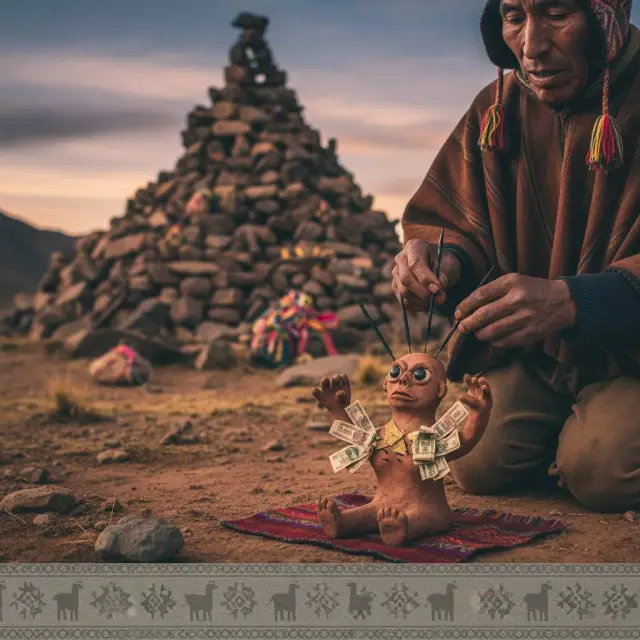
 t night, Don Ilario didn't burn coca. Nor did he sing. He planted three black stone pins in a clay figurine—a representation not of the man, but of his desire: his greedy eyes, his hands full of banknotes.
Then he buried it beneath an apacheta stone, where every traveler left an offering.
“May the Apu show you what you seek,” he said. “And may he never let you stray from it.”
 n the morning, the mine foreman was gone.
No trace. No struggle. Only his boots, lying upright beside the tent, as if he had taken them off to walk barefoot. The men searched the ravines. The condor watched them, still.
On the third day, one of them swore he saw the foreman walking toward the summit, arms outstretched, as if following an invisible path. He never came back down.
he machines were gone. The hill breathed again. Don Ilario says nothing. But every morning, he places a small stone on the apacheta.
And every morning, another stone is added—without him placing it himself.



