The Song of Ashes
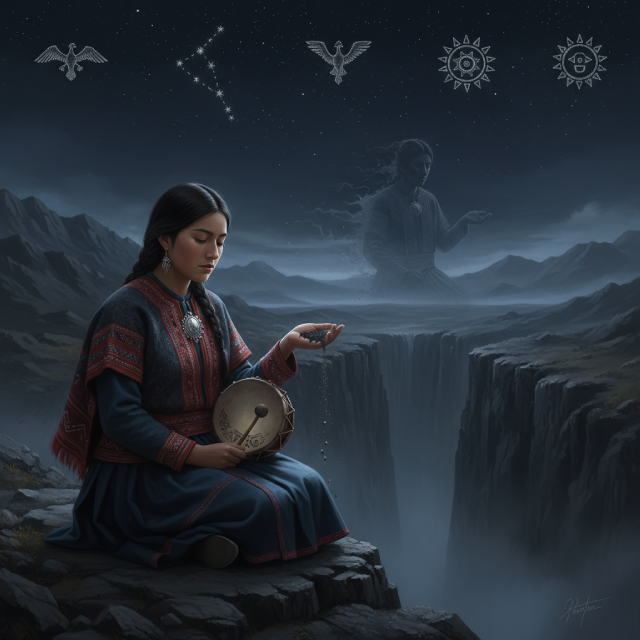
The Silence After the Fall
Killa didn't cry when they brought back her brother's body.
He had fallen from a precipice, they said. A shepherd's accident.
But Killa knows. She saw the marks on his wrists—thin, blue, like ties. And the absence of fear in his eyes, even in death.
The one who pushed him is named Rupay. He wanted their family's land. He told the others the boy was foolish. No one dared contradict him.
The Legacy of the Voice
From a wooden chest made of *q'euñi*, Killa takes out a tambourine covered in viscacha skin and a small bag of black ash.
Her grandmother taught her:
"The funeral song is not for the dead. It is for those who refuse to see." This song is passed down only to women. It is sung only once. And he doesn't forgive.
The Rigged Vigil
Rupay attends the vigil, standing with his hands folded, looking pious. He brings shisha and flowers.
Killa doesn't look at him. She sits in the center, lights a llama fat candle, and sprinkles the ash in a circle around herself.
Then she begins.
The Disorienting Song
It's not a melody. It's a rhythmic, deep breath, mimicking the wind in the throat and the cry of a wounded condor.
People lower their eyes. Some shiver. Rupay coughs—then laughs uncomfortably.
But at the third refrain, he hears the voice of his own father, dead for twenty years, saying to him:
"You have forgotten the promises made to the earth."
He stands up. He wants to flee. But his legs no longer obey.
The song continues. And in her mind, the images return:
Her brother, pushed.
Killa's hands, gripping the tambourine.
The ash, shining like eyes.
The public confession
Rupay falls to his knees. He cries out, not in pain, but from the impossibility of remaining silent.
He confesses everything, before everyone. Not because he is afraid—but because the song has restored the memory he had erased.
He speaks of his brother, the precipice, the land. He weeps like a child.
No one strikes him. No one judges him.
The community decides: he will live alone on the land he stole, without the right to speak for a year.
It is the worst punishment: the silence imposed on the one who silenced.
The end of the song
Killa never sings again.
But every year, on the same date, she places a handful of ash at the edge of the precipice. And sometimes, the wind blows a note — very brief — like an echo.



