The Ancestor's Mask
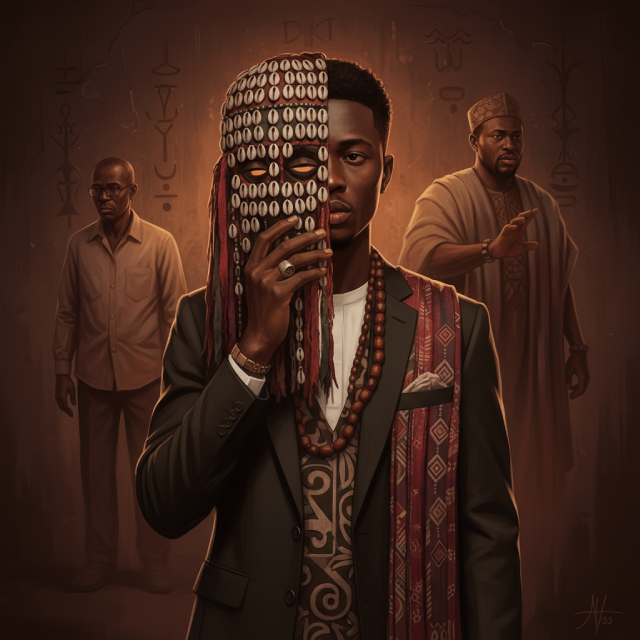
It is said that wearing the mask is to make room for the spirit. But it is also said that the spirit only comes if something within us calls it. A hunger. A shadow. A part of ourselves that we refuse to name. Ade was about to discover what an inheritance truly conceals.
Ade lived in Lagos, in a glass and steel apartment, far from the village dust. He was an accountant, effaced, apologizing even when bumped in the subway. Then his grandfather died. With the inheritance came a box of iroko wood, containing the Egungun: an ancestral mask covered in shells and red cloth.
Tradition dictated he wear it during the funeral. As soon as Ade smoothed the cloth over his face, the world shifted. The air became denser. His voice, usually trembling, took on a deep bass resonance that silenced the assembly. Under the mask, Ade was no longer Ade. He was the Ancestor. He made sharp decisions, redistributed the village lands with pitiless authority, humiliated a corrupt uncle who had stolen from the family. The village feared and admired him.
But when he removed the mask in the penumbra of his room, the fall was violent. He trembled, nauseous. He felt emptied, as if the mask had sucked his substance to fuel the spirit. Yet, the next day, at the office, he finally dared to ask for a raise. He dared to look his boss in the eye. A part of that sacred cruelty had stained him.
The conflict settled in. The mask made him a leader, a complete man, but it demanded a share of inhumanity. Without it, Ade was good, but invisible. With it, he was powerful, but dangerous. Was it the grandfather's spirit possessing him, or was it Ade's own shadow, his repressed aggressiveness, using the ritual to express itself?
One night, Ade took the mask to break it. He raised the hammer, ready to liberate the timid man from the tyranny of the chief. But he stopped. To destroy the mask was to deny a part of reality. It was to believe that power is evil in itself.
He did not break the wood. Instead, he began to wear the mask... without putting it on his face. He kept it on his desk. He learned to invoke the Ancestor's authority without the ritual costume. He integrated the shadow. He became firm without being cruel, respected without being terrifying. Redemption did not come from rejecting power, but from humanizing it. The mask remained in the box, but Ade had understood that the true Egungun resides not in the wood, but in the backbone of the one who wears it.



