The Shadows of the Secretary of Memory
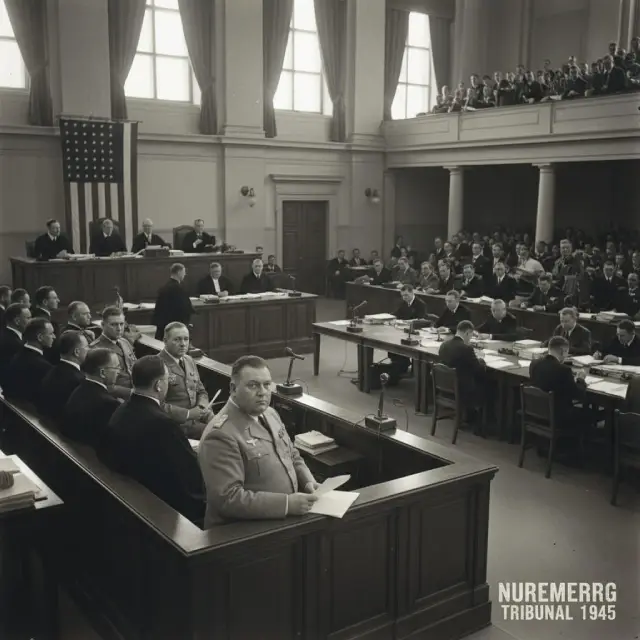
Winter 1945‑1946.
The Nuremberg courtroom smelled of wax, cold tobacco, and damp paper.
Every morning, before the translators arrived and the defendants were led into room 600, Miss Elke Voss opened the shutters of Dr. Kelley’s office, lined the files up on the windowsill—never on the desk, because he kept moving them—and checked that the typewriter hadn’t frozen overnight.
She didn’t take personal notes. She wasn’t allowed to.
But she read. She read everything.
One afternoon, while filing the transcripts of the interviews with the Reichsmarschall, she found, wedged between two pages, a crumpled sheet with no heading: the handwritten testimony of a young Polish prisoner at the Mauthausen camp. He described, without hatred, how a wolf‑dog trained by a guard had learned to recognize the faces of detainees trying to escape—not by scent, not by uniform, but by the trembling of their hands.
“This detail has ‘no psychiatric value,’” Kelley had scribbled in the margin. “Emotional anecdote. Archive or discard.”
Elke discarded nothing.
She slipped the sheet into a cardboard folder marked “Miscellaneous – Personal,” which she kept in the bottom drawer beneath the blank forms.
She wasn’t the only one.
The night watchman sometimes folded a scrap of paper he found in a hallway and tucked it into his jacket pocket. The Czech interpreter left certain sentences in his notes, even when they weren’t translated at trial. The cleaning lady, who had lost her brothers at Auschwitz, placed a glass of water by the archives each evening—not out of superstition, but because, she said, the dead are thirsty for testimonies.
Elke told no one about these gestures. She didn’t judge them. She acknowledged them.
It wasn’t heroism. It was a refusal: a refusal to let memory be reduced to whatever served the verdict.
Göring laughed in the courtroom, saying, “You understand nothing about the German soul.”
But it wasn’t the German soul that Elke sought to understand.
It was the soul of the trembling‑handed Pole—and his right to exist outside the file.
In the evening, as she left the palace, she left the folder open on her desk.
The Shadow weighed nothing.
But it did not disappear.



