Yazdegerd I
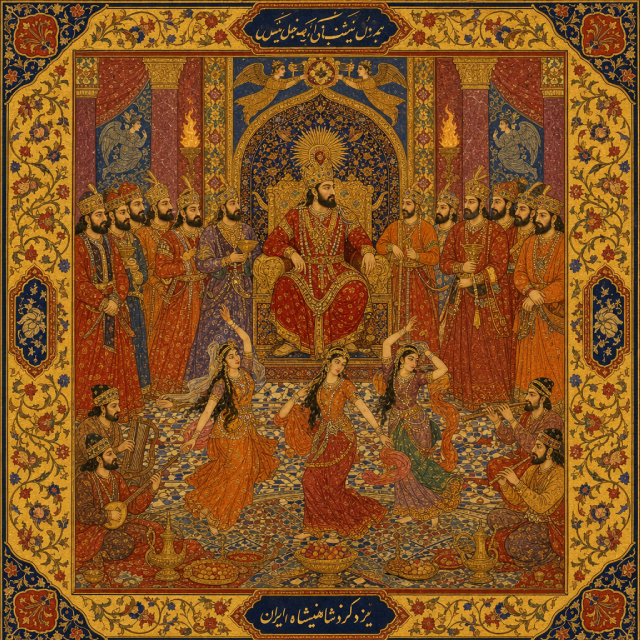
Yazdegerd came to the throne after his brother Bahram IV was assassinated. The Sasanian Empire at the time was dominated by powerful Parthian noble families (the wuzurgan) and the Zoroastrian clergy (Magi), who had grown accustomed to influencing—or even murdering—kings who tried to assert too much central authority. Three of Yazdegerd’s immediate predecessors had met violent ends at the hands of the nobility.
Yazdegerd started his reign with a reputation for justice and mildness. Roman sources like Procopius praised him as a ruler of “nobility of character,” a wise and benevolent king who championed the poor.
What made him stand out was his religious tolerance in an era when religious conflict was common. He maintained peaceful relations with the Eastern Roman (Byzantine) Empire. When Emperor Arcadius asked him to act as guardian for his young son Theodosius II, Yazdegerd accepted and helped preserve the Roman throne—sending a tutor and threatening war against any usurpers. This act of statesmanship helped keep peace on the western frontier.
He was especially generous toward religious minorities:
Christians: In 410 CE, with the help of Bishop Marutha, he issued a decree (sometimes called the Sasanian “Edict of Milan”) that allowed Christians to worship openly, rebuild churches, and organize their Church of the East. This brought stability and even integrated Christian leaders into the bureaucracy.
Jews: He treated the Jewish community with great respect, reportedly marrying a Jewish woman named Shushandukht (daughter of the Jewish Exilarch). Jewish sources compared him to Cyrus the Great for his kindness.
This tolerance earned him admiration from Christians and Jews, who saw him as a protector. However, it deeply angered the Zoroastrian clergy and much of the nobility, who viewed any deviation from strict Zoroastrian dominance as a threat.
Persian and later Arabic sources (often influenced by the Zoroastrian clergy) painted a very different picture. They called him “the Sinner” (al-Athim or bazahgar) and accused him of tyranny, arrogance, and suppressing the nobles and priests. He was said to have executed priests who opposed his policies and worked to curb the power of the great noble houses.
Toward the end of his reign, some Christians—emboldened by their freedoms—began destroying fire temples and acting provocatively. Under pressure from the clergy, Yazdegerd shifted policy and allowed a limited persecution of Christians, though it was brief and did not erase his earlier legacy of tolerance.
In 420 CE, while in the northeast (likely in Hyrcania/Gurgan or near Tus), Yazdegerd died under suspicious circumstances. Official Sasanian tradition claimed he was killed by a mysterious white horse that emerged from a spring, kicked him to death, and then vanished—interpreted as divine punishment for his “sins.” Historians generally see this as a myth fabricated by the nobility to justify assassinating him in a remote area.
His death triggered immediate chaos. The nobility tried to block his sons from the throne. His eldest son Shapur IV briefly took power but was murdered. Eventually, another son, Bahram V (Bahram Gur), seized the throne with the help of an Arab army from the Lakhmids and became one of the most famous Sasanian kings.
His Legacy.
Yazdegerd I’s reign is remembered as a period of renewal for the empire despite the internal conflicts. He strengthened royal authority against the nobles (at great personal cost), promoted relative religious harmony for much of his rule, and maintained peace with Rome. His story highlights the eternal tension in the Sasanian Empire between central royal power and the influence of the aristocracy and priesthood.
In many ways, he was a forward-thinking ruler ahead of his time—tolerant, diplomatic, and pragmatic—but the conservative forces of his era ultimately brought him down. His name lived on in legend, both as a “sinner” in Zoroastrian eyes and as a protector in Christian and Jewish traditions.



